The Science of Guidance: How AI Turns Personal Data into Meaningful Action


Gyms are more connected than ever. Each visit can produce data from equipment, wearables, body composition scans and digital training platforms.
The problem has moved past access to information. The next challenge is helping members and coaches use that information well.
Members and coaches often face the same question at the moment that matters most: What should I do next and why?
Data alone does not create better outcomes. Without clear guidance, even useful insights can lead to hesitation, confusion or disengagement. AI can help close that gap when it connects trusted data to training decisions members can use.
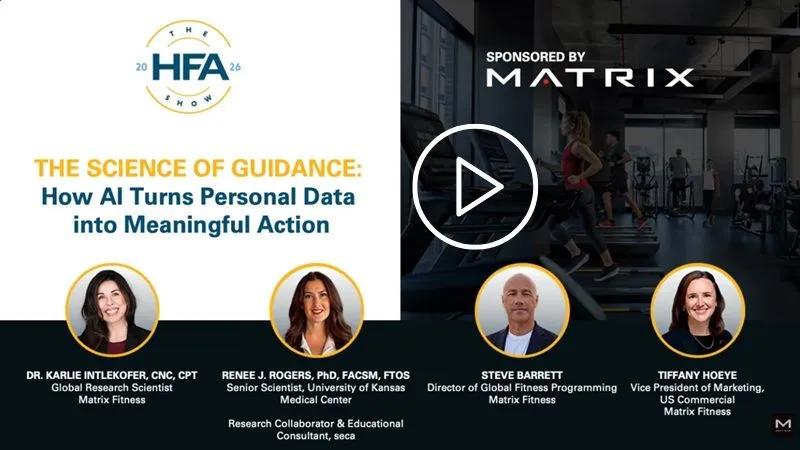
That was the focus of The Science of Guidance: How AI Turns Personal Data into Meaningful Action, a panel discussion from The HFA Show 2026. The conversation looked at how applied science, trusted measurement and adaptive programming can turn personal data into guidance that supports better action on the gym floor.
AI guidance should answer the next workout question
Most members need fewer numbers during a workout and more help deciding what to do next.
That may mean choosing the right weight, adjusting effort, changing a set target or staying with the workout when motivation drops. These decisions happen during the session, so guidance needs to be close to the point of action.
A plan sent too early can be forgotten. A prompt delivered during the workout can help the member act before hesitation takes over. That timing can make the difference between a completed session and a missed opportunity.
For operators, this creates a clear priority. AI guidance should reduce guesswork. It should help members make simple training decisions at the moment those decisions happen.
Personal data needs accuracy before it can guide members
Guidance depends on the quality of the data behind it. If a measurement is inaccurate or hard to repeat, the next recommendation may miss the mark.
This matters most when members are tracking change over time. Body composition is a good example. A member may be training regularly, moving better and feeling progress. If the measurement does not show that change, motivation can drop.
Accurate measurement gives staff and members a stronger starting point. Repeatable measurement gives them a way to track change. Together, they help turn personal data into useful feedback.
Operators should ask whether the data they collect can be trusted, repeated and explained in plain language. If staff cannot explain what a number means, members may struggle to use it.
Fitness data becomes more useful when it builds over time
A first scan or assessment gives a baseline. It shows where a member is starting.
The value grows when future measurements connect with workout history. Body composition data, training activity, recovery patterns and performance trends can help show how a member is responding to their program.
That history can guide better next steps. A member may need more recovery, a different training load or a change in programming focus. AI can help connect those patterns faster than staff could do manually across a large member base.
The member does not need to see every data point. A better experience can feel simple on the surface, with deeper analysis working in the background.
Adaptive programming should make training easier to follow
Programming should help members take action. If a program feels too complex, members may ignore it or stop using it.
AI-guided programming can create a more structured path than random online workouts or generic plans. It can adjust based on inputs such as activity, performance and changes over time.
The human role still matters. Trainers can read energy, stress, hesitation and effort in ways data may miss. They can help members feel supported and keep the program grounded in the person standing in front of them.
AI can take on routine program tasks, pattern recognition and basic adjustments. Trainers can spend more time coaching, checking form, answering questions and helping members stay engaged.
Guided training works when data leads to action
Fitness operators do not need to collect every possible data point. They need the right data connected to the right decision.
A useful AI-guided experience should answer practical questions:
- What does this member need today?
- Can the member act on the guidance without extra explanation?
- Does the data help staff coach more effectively?
- Can progress be tracked in a way members trust?
- Does the experience keep the human side of coaching in place?
The future of AI in fitness will depend on how well facilities connect personal data to action. Trust, timing and practical guidance matter more than the volume of data collected.
Listen to the full conversation from The HFA Show 2026 and learn how AI, trusted measurement and adaptive programming can help turn personal data into training guidance members can use.
